Unlock the Mystery of Golf: A Beginner's Guide to Key Terms
A Beginner's Guide to Basic Golf Terminology
Learning golf can feel overwhelming, especially with all the unfamiliar terminology. This comprehensive guide breaks down essential golf terms, making it easy for beginners to understand and confidently navigate the course.
The Basics: Understanding the Course
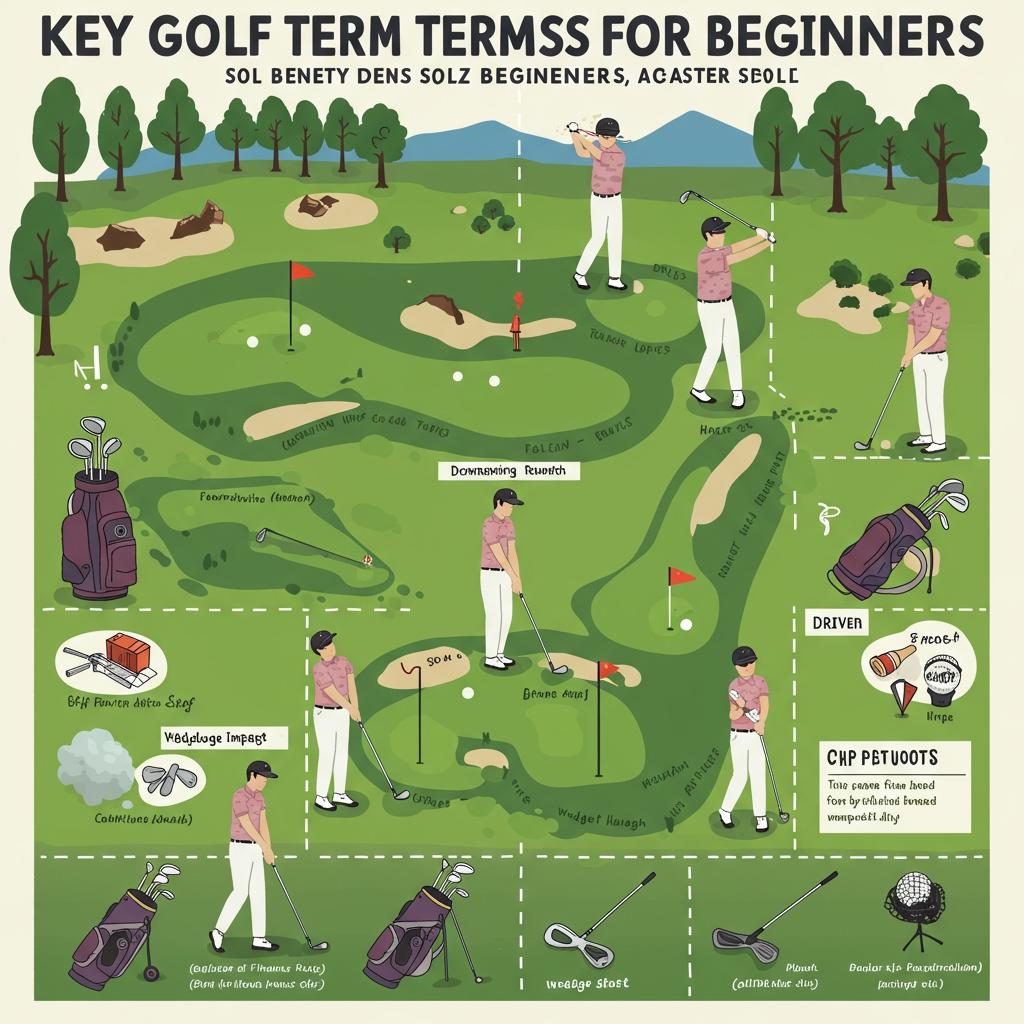
Before diving into the swing, understanding the course layout is crucial. A tee is where you begin each hole. The fairway is the closely mown area between the tee and the green. The rough is the unkempt area of grass surrounding the fairway, making shots more difficult. The green is the smooth, short-grass area surrounding the hole, where you putt. The hole is, of course, the target you aim for. Finally, a hazard refers to any obstacle on the course, such as a sand bunker (bunker or sand trap), water, or dense vegetation. Understanding these fundamental elements is your first step to enjoying the game.
The Swing and the Shot
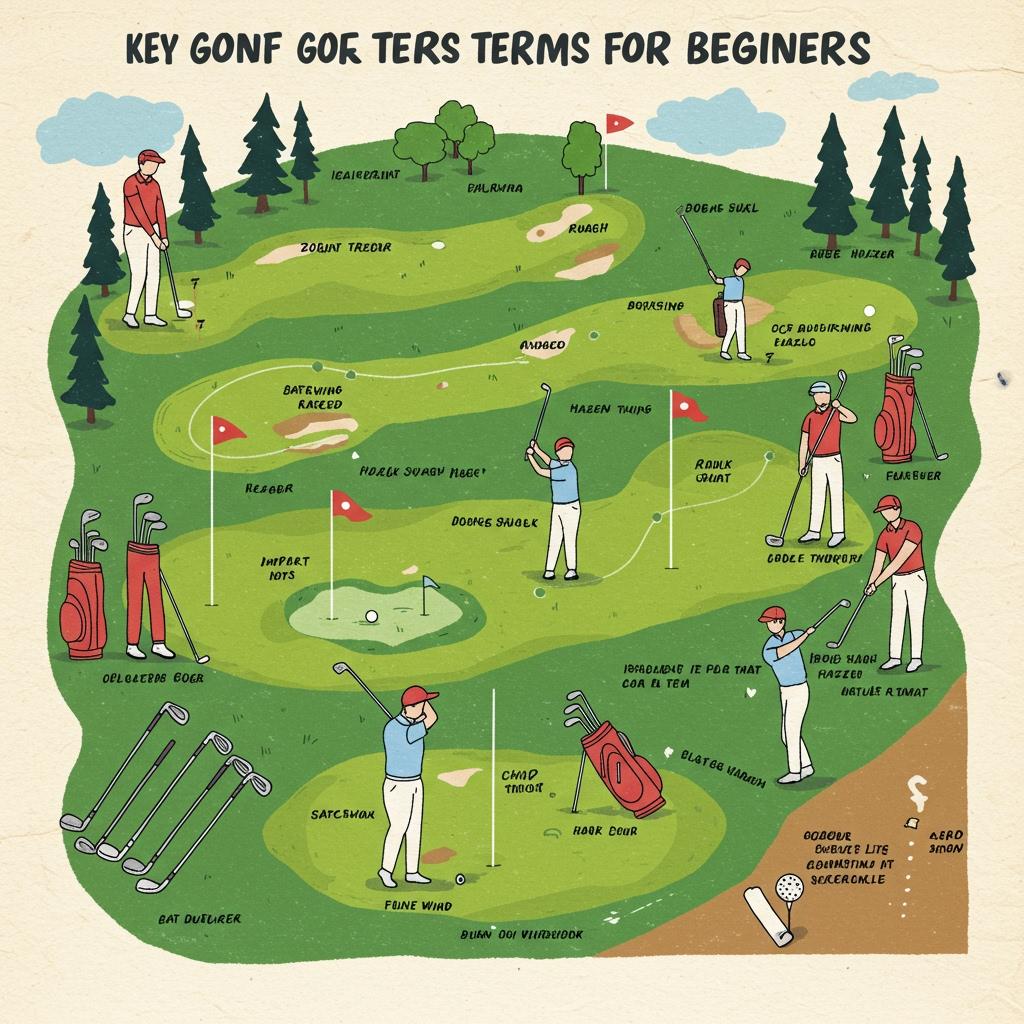
Your golf swing consists of several parts, from the backswing (where you take your club back) to the downswing (where you bring it forward to hit the ball). The impact is the moment of contact between the club and ball. The follow-through is the completion of your swing. Your shot is a single attempt to hit the ball. Different types of shots include a drive (from the tee), an iron shot (using an iron club), a wedge shot (using a wedge club), a chip shot (a short, low shot played from near the green), and a putt (a roll of the ball on the green). Understanding these terms will give you a better grasp of golf mechanics.
Scoring and Etiquette
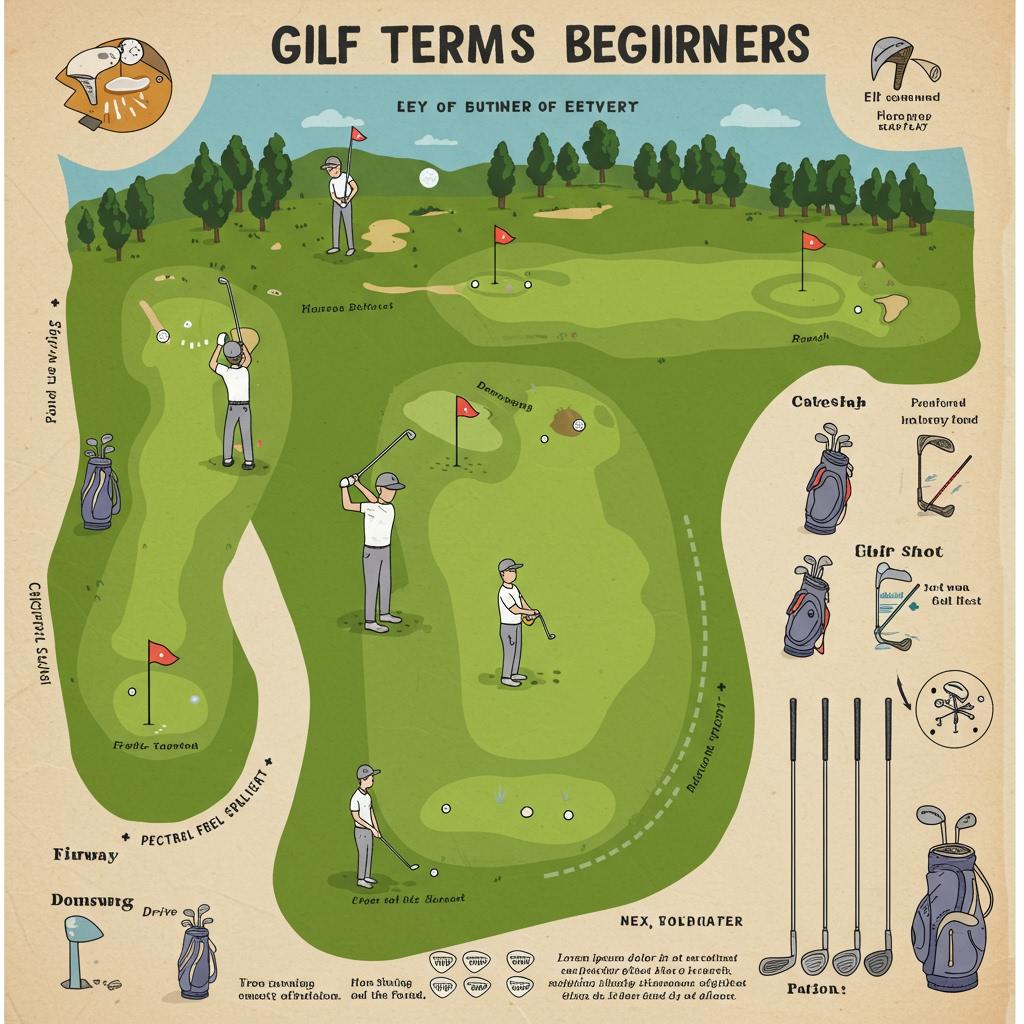
Your score is the total number of strokes it takes you to complete a round of golf. A par is the standard number of strokes expected to complete a hole. If you take fewer strokes than par, you have a birdie (one under par) or an eagle (two under par). If you take more strokes, you have a bogey (one over par) or a double bogey (two over par). Golf etiquette involves respecting fellow players and maintaining the course. This includes repairing divots (divot refers to a chunk of turf removed during the swing), raking bunkers, and adhering to pace of play. Good etiquette ensures a positive experience for everyone.
Clubs and Equipment
Golf clubs are categorized into woods (longer clubs for distance), irons (for more accuracy and control), and wedges (high-lofted clubs for short shots around the green). Each club has a different loft (the angle of the clubface), affecting the trajectory and distance of the ball. Your golf bag carries all your clubs, along with balls and other accessories. Understanding the different clubs and their purposes is vital to making the right shot selection. A putter is a specialized club used on the green. Your grip is how you hold the club, affecting your swing.
Conclusion
Learning golf terminology is the first step towards mastering the game. By understanding these key terms, you’ll be better equipped to play, communicate with fellow golfers, and improve your overall golfing experience. Don't be afraid to ask questions and continue learning – the joy of golf lies in the ongoing journey of improvement.
Keywords: Golf Terminology, Golf for Beginners, Basic Golf Terms


Comments
Post a Comment